Next case
Menu
The Portfolio
Role / Service
User Research & UI Development
Overview...
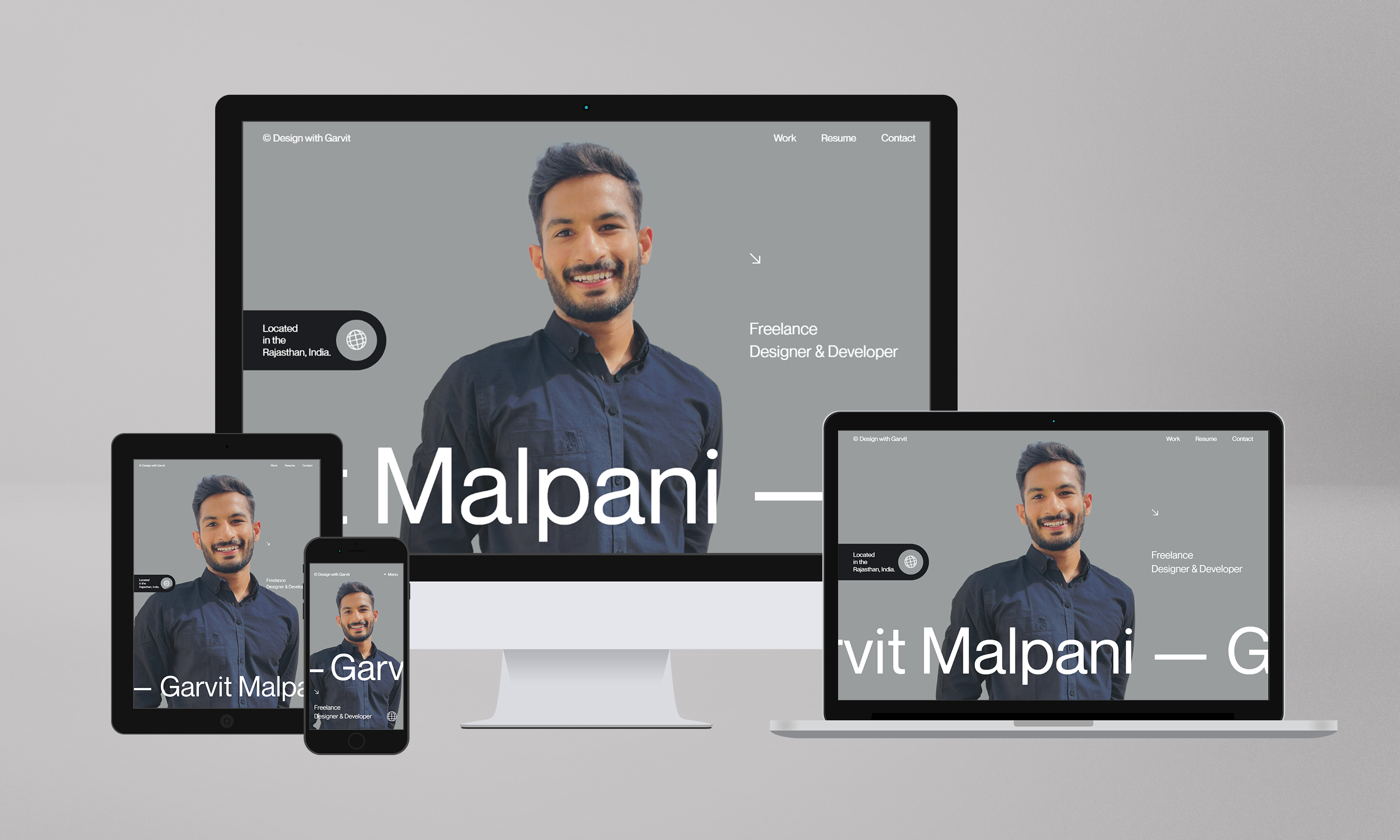
The Portfolio website is designed to showcase my skills and experiences in UI/UX design. The goal of this site is to provide potential employers, clients, and peers with a clear and professional overview of my work, qualifications, and contact information. As the sole designer and developer, I was responsible for creating both the visual design and the user experience of the site.
Empathise & Define Stage...
Understading user needs
Target Audience:
• Managers: They are looking for a well-organized and visually appealing portfolio to
quickly assess candidates' skills and suitability.
• Prospective Clients: They need to see past projects and understand the design approach
to gauge
the fit for their needs.
• Design Peers: They seek inspiration and insights into my design process and
approach.
Pain Points:
• Navigability: Users might find it challenging to navigate through the site if the
layout isn’t intuitive or if there are too many steps to find specific information.
• Content Overload: Users could be overwhelmed by too much content or poorly organized
information, leading to difficulty in finding key details.
• Accessibility Issues: Some users might face difficulties if the site isn’t designed
with accessibility in mind, such as lack of contrast or non-responsive design elements.
User Research Insights:
on my experience and feedback from previous job
applications and
networking, I understood that a streamlined and user-friendly design was crucial for making a
positive impression. I focused on creating an intuitive navigation system and presenting
information in a clear, engaging manner.
Problem Statement:
employers and clients need a professional, easy-to-navigate portfolio that clearly presents my design skills, past work, and professional background.
User Persona...
01
Hiring Manager Aman
Age: 35
Occupation: HR Manager
Citizen: India
Tech Level: Intermediate
Goals: To evaluate the designer’s past projects and design approach.
Needs: Detailed project descriptions and visual examples.
02
Prospective Client Riya
Age: 40
Occupation: Startup Founder
Citizen: India
Tech Level: High
Goals: To quickly assess a candidate’s skills and experience.
Needs: Clear and organized presentation of work, easy navigation.
03
Design Peer Prateek
Age: 30
Occupation: UI/UX Designer
Citizen: India
Tech Level: High
Goals: To find inspiration and learn about design processes.
Needs: Needs: Insight into design methodology and project case studies.
Ideate & Wireframe...
Understading user needs and pain points
Brainstorming Solutions:
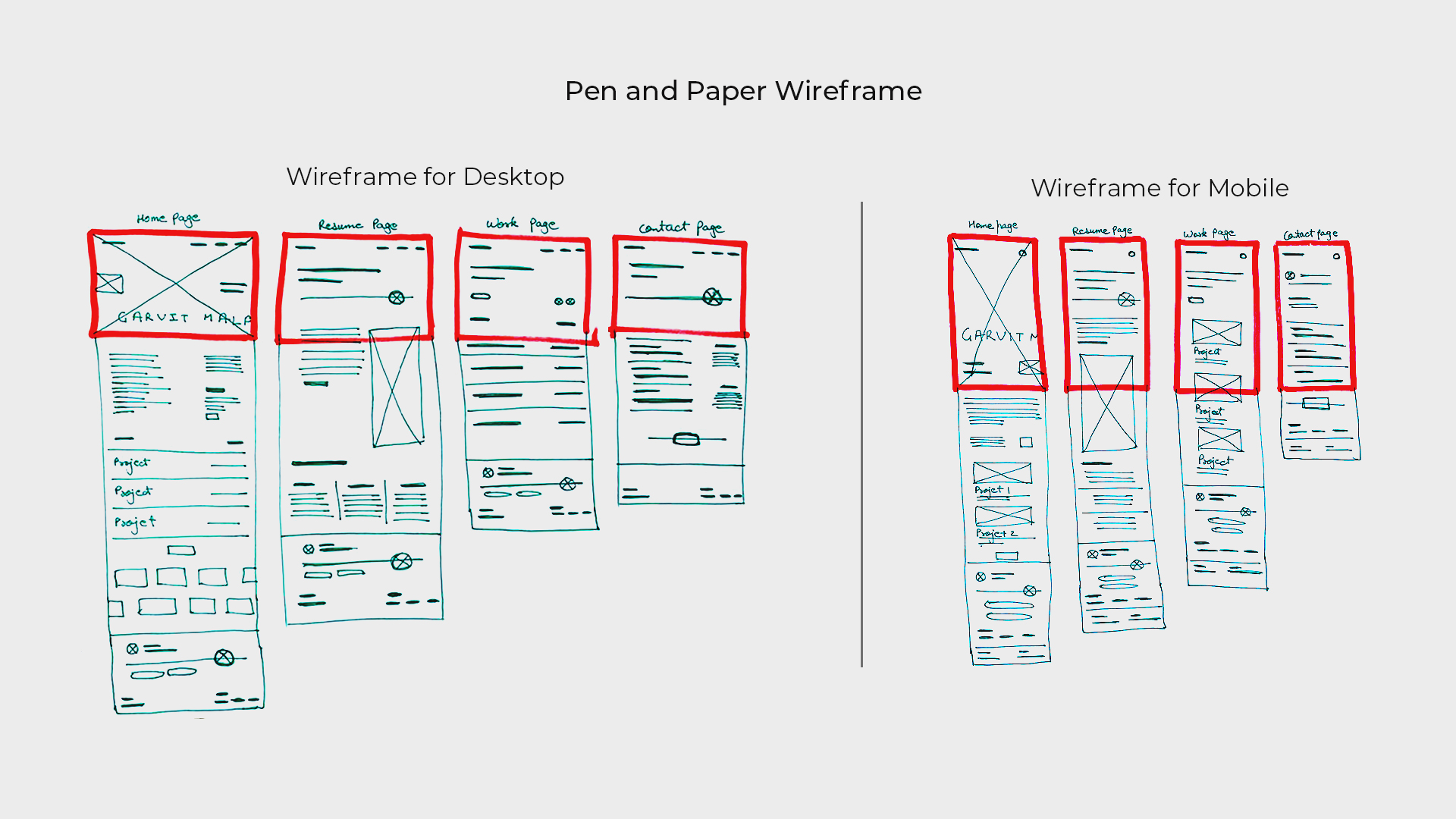
Homepage: Create a visually striking hero section that introduces myself and highlights
my
certifications. Include a professional photo and a brief bio.
Work Page: Develop a grid or list view to showcase UI/UX projects with high-quality
images,
project descriptions, and case studies.
Resume Page: Provide an easily accessible and downloadable resume, accompanied by a
summary of
key qualifications and achievements.
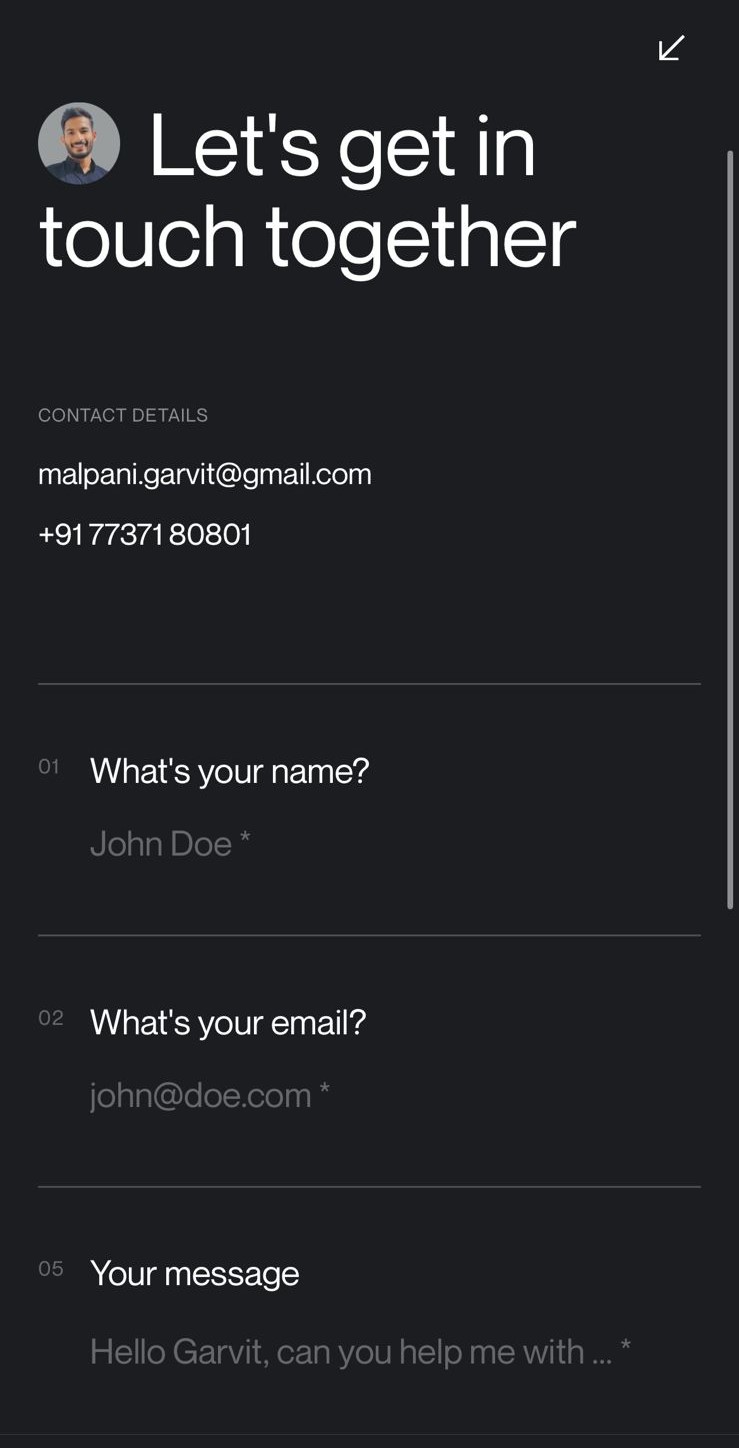
Contact Page: Design a straightforward contact form with validation and include
additional
contact methods such as LinkedIn and email.
Prototyping...
Bringing Values to the User
In the prototyping phase, I began with low-fidelity (lo-fi) wireframes to establish the basic structure and layout of each page. These lo-fi prototypes focused on the overall user flow and content organization, allowing me to quickly iterate on the design without being bogged down by details. Once the structure was validated, I moved on to high-fidelity (hi-fi) prototypes, incorporating detailed design elements such as typography, color schemes, and interactive features. The hi-fi prototypes provided a realistic preview of the final website, enabling thorough usability testing and refinement to ensure a seamless and visually appealing user experience.
Low - Fidelity Prototyping
produced Lo-Fi Prototypes variation for testing and quick changes.
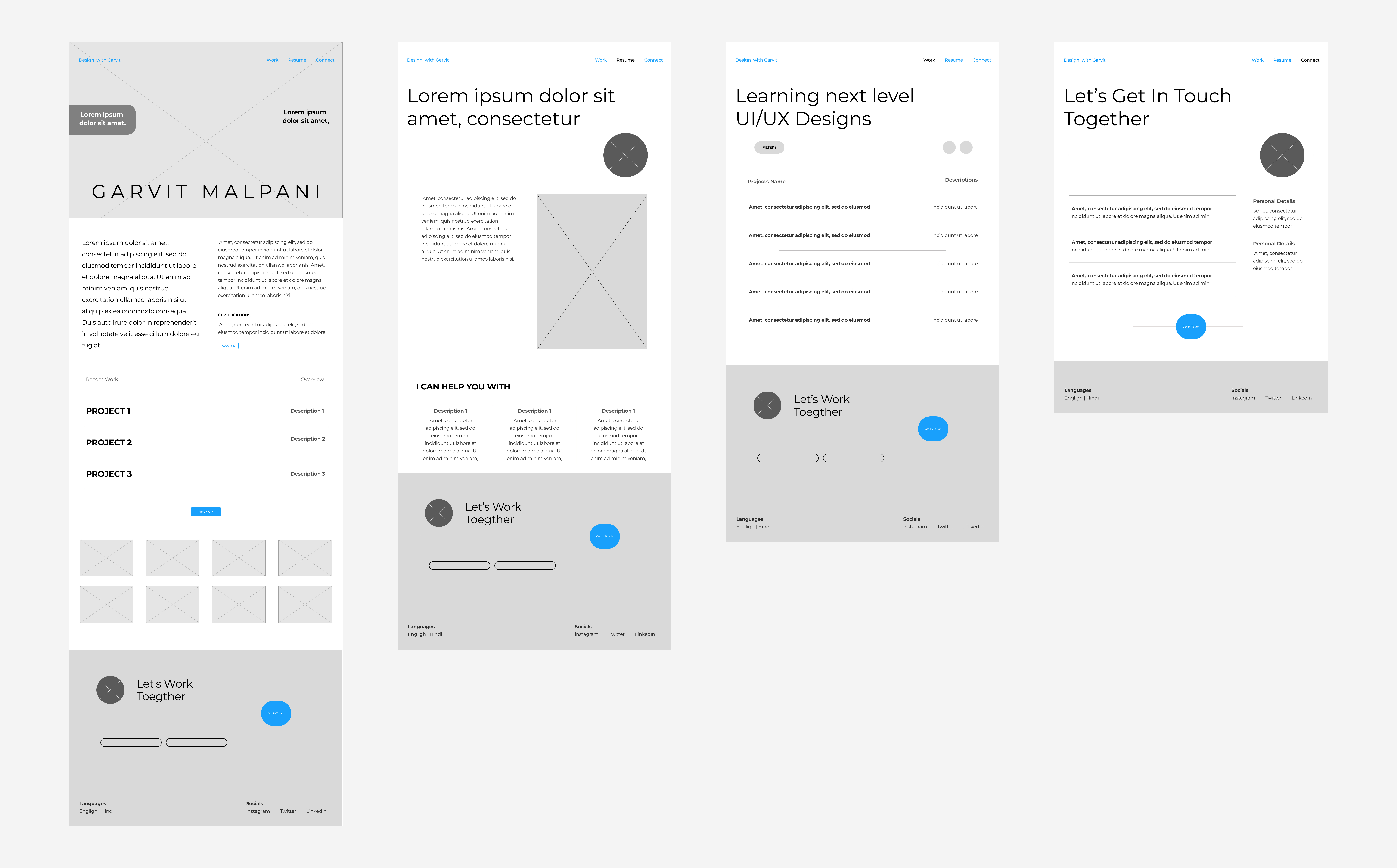
High - Fidelity Prototyping
produced Final Hi-Fi Prototypes variation for testing.
Reflection...
Outcome
The final website effectively meets the needs of my target audience. It provides a professional, easy-to-navigate platform for showcasing my skills and experience. The design is clean, intuitive, and visually appealing, addressing previous pain points and aligning with the expectations of potential employers, clients, and design peers.
Conclusion
This project reinforced the importance of addressing user pain points and implementing feedback to enhance usability. It highlighted the value of continuous improvement in creating a positive user experience.
Next Steps
Plan to periodically update the portfolio with new projects and achievements. Continue to gather user feedback to ensure ongoing usability and design enhancements.